Making the cube
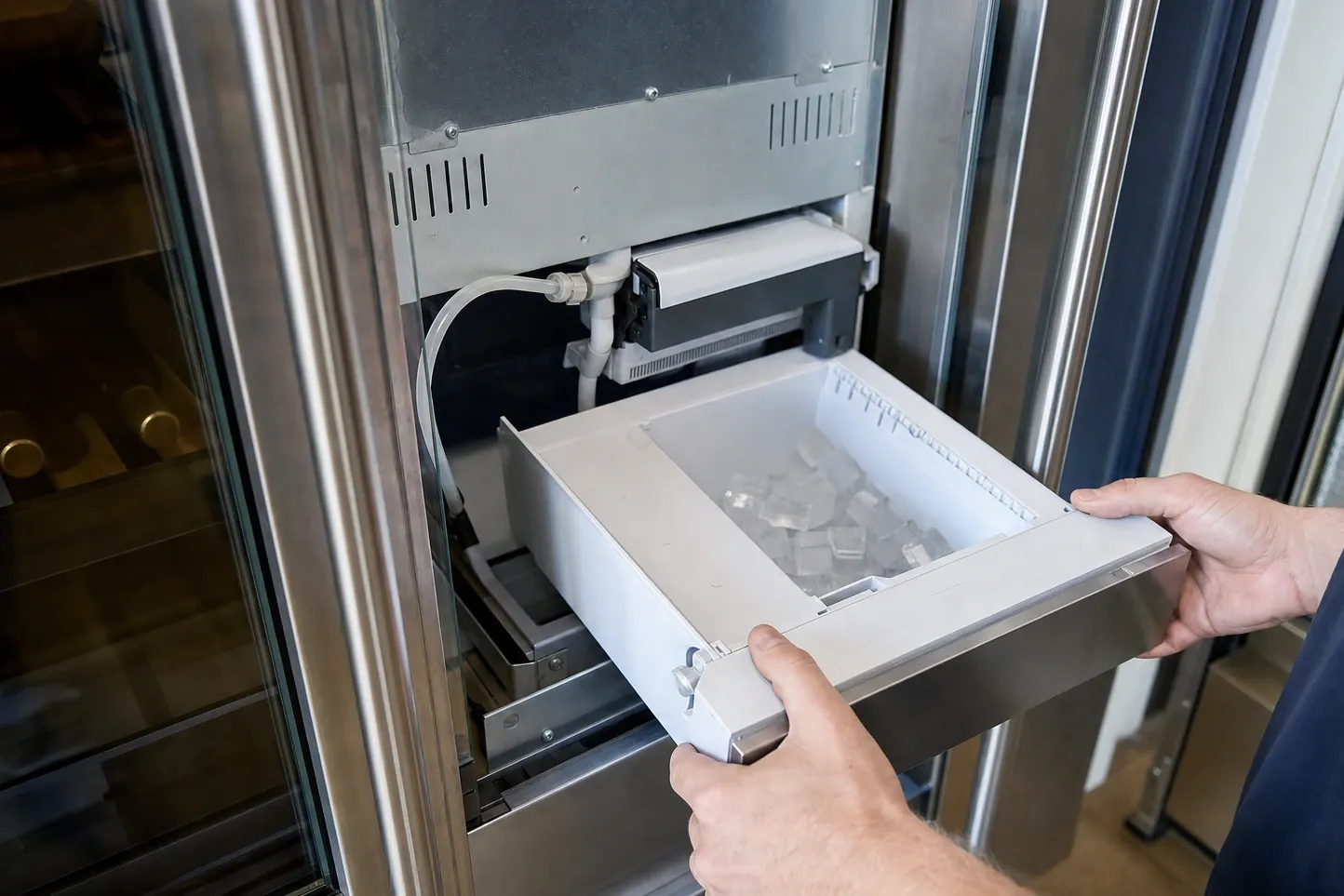
Sub-Zero ice maker module
The head unit that times the freeze, calls for water, drives the ejector and counts the cycle.
- What it does
- The head bolted to the side of the mould, and the only thing in the water path that decides anything. It waits for the mould to come down to temperature, energises the mould heater to break the bond, turns the ejector, and then opens the water valve for the fill that begins the next batch.
- Where it sits
- Inside the freezer compartment on the mould assembly, behind a cover that carries the timing gear and the switches. Reaching it means the bin out, the ice maker off its mounts and the leads disconnected, which is one reason the fill gets proved from outside first.
- How it is tested
- In sequence, and always after the water side. Voltage at the head's own test points with the machine live, resistance across the heater and motor circuits with it dead, and then a harvest watched from the first movement to the last. A head that turns and never fills is a different fault from one that never turns.
- What the work costs
- Ice maker, water valve or supply line: $300–$820, after the flat $89 diagnosis.
Pattern
What we usually find
- A head doing exactly what it should on a fill that never arrived, which is why the valve, the filter and the line get measured before anything inside the freezer is touched.
- A harvest that begins and stalls, with a cube wedged between the ejector and the stripper holding the whole train.
- A mould heater circuit no longer warming the mould, so nothing releases and the cycle sits there waiting for a release that cannot come.
- Corrosion from a fill that has been overshooting for months, which reaches the switches long before it reaches the motor.
Most often first. Order comes from what the visits keep turning up, not from a count.
Most of what gets called a module fault is a supply fault wearing the module’s name. The head has no way of knowing whether the water it asked for actually arrived. It counts, it heats, it turns, and it does all of that just as faithfully over an empty mould.
So the order matters more than the part does. Prove the fill, then judge the head. Done the other way round, a sound assembly gets changed and the same empty bin comes back the following week.
Repair or replace
What usually happens to it
Replaced as a unit. The timing gear, the switches, the motor and the heater circuit sit behind one cover and are timed against each other, so a head that has failed internally is changed complete rather than opened up. The argument worth having first is whether it failed at all: most modules condemned over the phone are simply short of water.
Two follow-ups
Can one switch inside the module be replaced on its own?
It is not how these are serviced. The switches, the cam and the motor are a matched set behind one cover, and a head that has been opened rarely times correctly afterwards. Denver Sub-Zero Repair Experts quotes the assembly, and only once the water side has been measured and cleared.
Why replace the head when the ice maker clearly still moves?
Movement only proves the motor turns. A head can drive its ejector on time and still miss the fill, misread the mould or end the cycle early, and every one of those looks like a healthy machine from the kitchen. The test is a whole revolution, not the noise.