Making the cube
Harvest motor and ejector
The gearmotor and the blades that sweep a finished cube out of the mould and into the bin.
- What it does
- A small geared motor and a set of blades on one shaft. Once the tray has been warmed the motor turns those blades through it, sweeps the loosened cubes over a stripper and into the bin, and the same revolution trips the switches that bring on the following fill.
- Where it sits
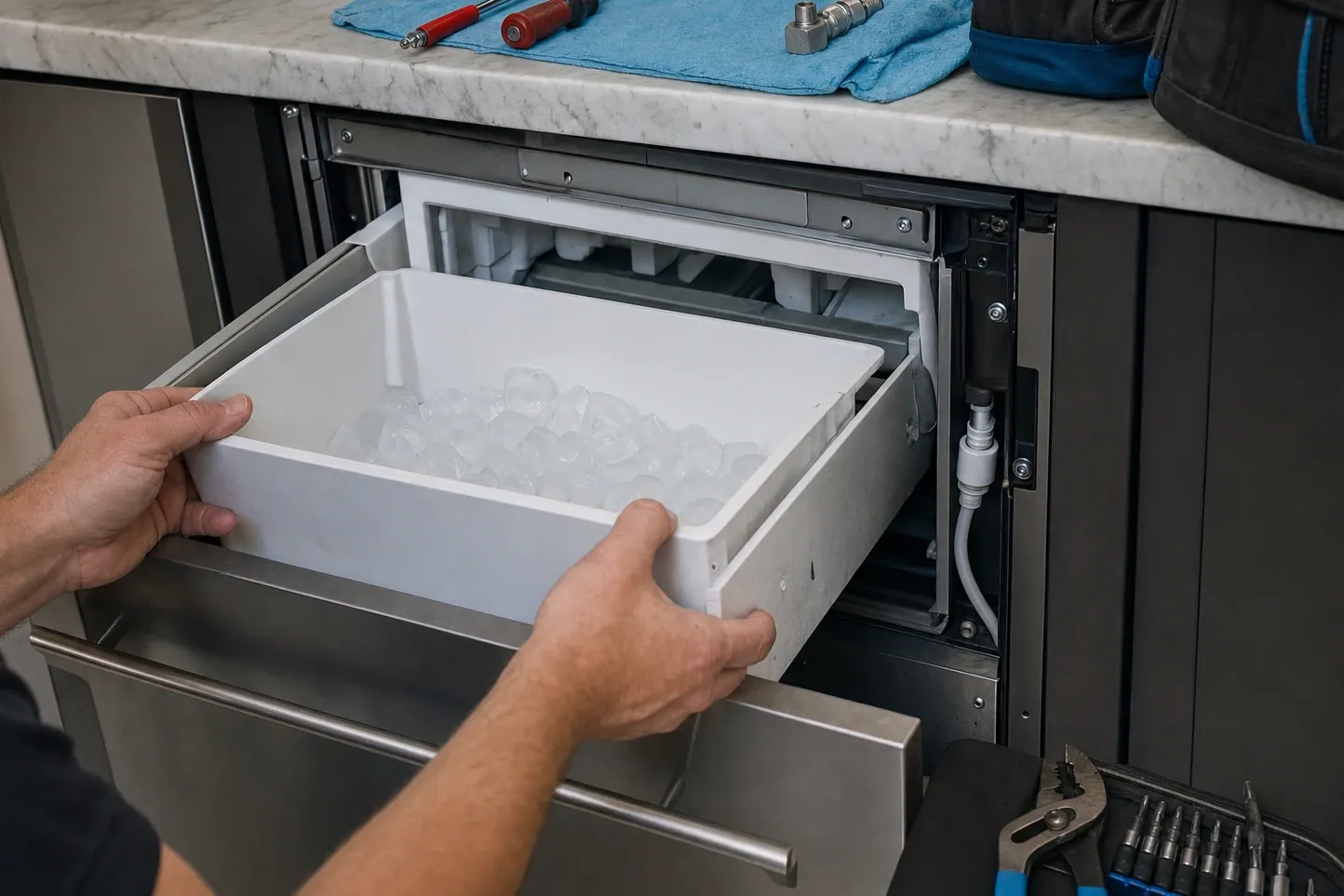
- Behind the head's cover, the blades reaching into the mould through slots along its length. None of it is visible with the ice maker in place: cubes are seen leaving, and that sweep is the only evidence anyone gets that the train is turning.
- How it is tested
- By running a harvest and watching it all the way through. A motor that hums without turning, blades that halt part way, and a sweep that finishes but never brings a fill each point somewhere different. With the power off, motor resistance is read at the head's test points before anything comes apart.
- What the work costs
- Ice maker, water valve or supply line: $300–$820, after the flat $89 diagnosis.
Pattern
What we usually find
- A cube wedged between a blade and the stripper, stopping the train and leaving the cycle stranded part way through.
- Cubes that never released, so the motor is turning against a tray still full of ice and the harvest stalls every time.
- A gear train worn enough to slip under load, which shows as a sweep that completes on some cycles and not on others.
- A motor humming without turning after years of straining against ice that should have been let go first.
Most often first. Order comes from what the visits keep turning up, not from a count.
Everything else in this group is electrical or thermal. Here is the one place in a Sub-Zero ice maker where metal has to move ice, so it is also the place that takes the damage when something upstream has already gone wrong.
It explains a complaint that sounds self-contradictory: a machine plainly running and plainly not producing. The train can turn on schedule for weeks to an empty result, and the motor is the last thing that deserves the blame for it.
Repair or replace
What usually happens to it
Replaced with the head. The gears, the cam and the switches are timed against one another, so a worn train is changed as an assembly rather than rebuilt in place. Clearing the jam comes first, though: a blade stopped by a wedged cube is not a failed motor, and Sub-Zero's instruction is to switch the ice maker off and remove obstructions by hand.
Two follow-ups
Can I free a jammed cube myself?
Yes, within limits. Switch the ice maker off first, then lift away whatever comes loose with your fingers, which is how Sub-Zero's own troubleshooting puts it. Nothing rigid goes into the tray. If the ice will not shift, let the freezer defrost rather than lever against the blades.
The motor runs but no ice reaches the bin. What is that?
A harvest that turns without delivering means the cubes never released, so the search moves to the mould heater and the sensor ahead of the motor. Denver Sub-Zero Repair Experts times a full revolution and watches exactly where it stops before quoting anything.