Storing and draining
Drain line and air gap
Where the meltwater goes, and the reason a machine that makes ice perfectly well still floods a cabinet.
- What it does
- It carries away everything the machine does not turn into ice: the water left over from a freeze, the rinse water after a clean, and whatever melts in the bin. On a gravity machine the fall in the hose is the only thing moving that water, so the run itself is the working part.
- Where it sits
- It leaves the back of the cabinet low down and runs to a household drain, usually through a stand pipe with a trap under it. Sub-Zero expects an air gap between the machine and that drain, and local plumbing code decides the rest.
- How it is tested
- The hose is followed by hand from the cabinet to the drain, because the fault is nearly always something you can see. Sub-Zero's instruction is plain: the drain line must be neither kinked nor looped. Then the fall is checked along every horizontal run, a quarter inch of drop in every foot per the installation guide, and a poured bucket proves it clears.
- What the work costs
- Ice maker, water valve or supply line: $300–$820, after the flat $89 diagnosis.
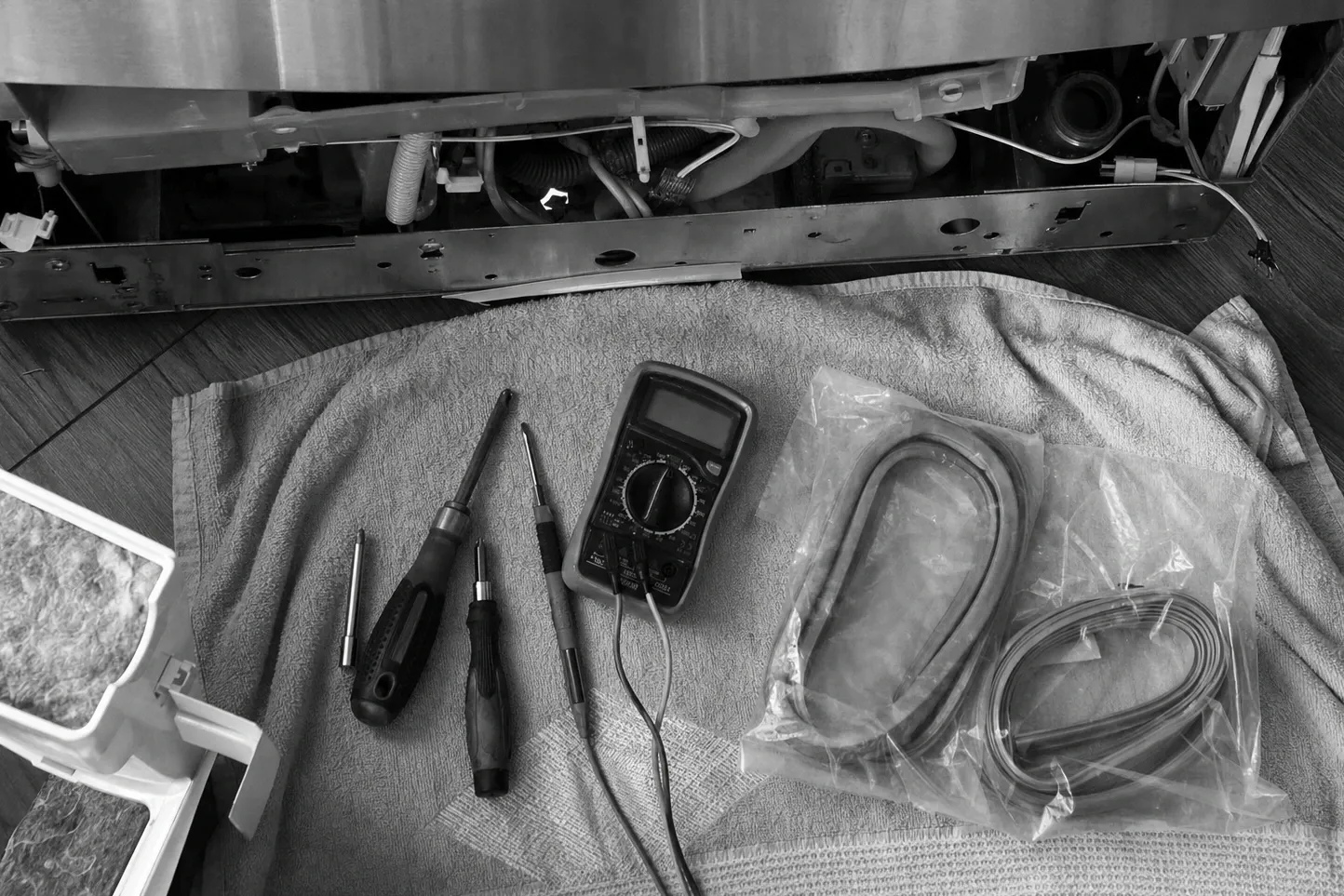
Pattern
What we usually find
- A loop behind the cabinet holding a slug of water the fall can never push past, so the machine backs up quietly for weeks.
- A kink taken when the unit was pushed home after a clean, which is why the hose gets looked at before anything is dismantled.
- A run with no fall in it, laid flat along a joist because the drain was on the wrong side of the kitchen.
- Slime and scale narrowing the bore, the reward for skipping the cleaning and sanitising procedure Sub-Zero asks for twice a year.
Most often first. Order comes from what the visits keep turning up, not from a count.
Of everything on this site, the drain is the part most often wrong from the day the kitchen was finished rather than from anything wearing out. A cabinet gets pushed back, the hose folds, and the machine works perfectly for a year before the standing water shows.
So the question worth asking on the phone is not what changed this week. It is who was last behind the unit.
Repair or replace
What usually happens to it
Straightened, re-routed or cleaned out; replaced only where the hose has gone brittle or has been crushed. Most of this work is re-hanging a run somebody looped behind a cabinet during a kitchen job, and it holds once it is done properly. Where the household drain itself is the problem, the next call is a plumber's and not ours.
Two follow-ups
What is the air gap there for?
It stops dirty water travelling backwards from the household drain into a machine that makes something you put in a drink. The installation guide expects one between the cabinet and the drain point, and your local plumbing code settles how it is formed.
There is water under the cabinet. Is it definitely the drain?
Not definitely, but it is where to look first. Supply fittings, the bin and the drain all put water on the same floor. Denver Sub-Zero Repair Experts dries the area, runs one full cycle and watches where the wet begins, because guessing at this costs a second visit.