Ice Maker Repair
Sub-Zero ice maker output falling? Start with Denver's water, not the module
Hollow cubes, a half-empty bin and ice that tastes of the freezer are usually scale and a tired fill valve rather than a failed ice maker. What the cube shape tells you, what to check yourself, and when a Denver visit is worth booking.
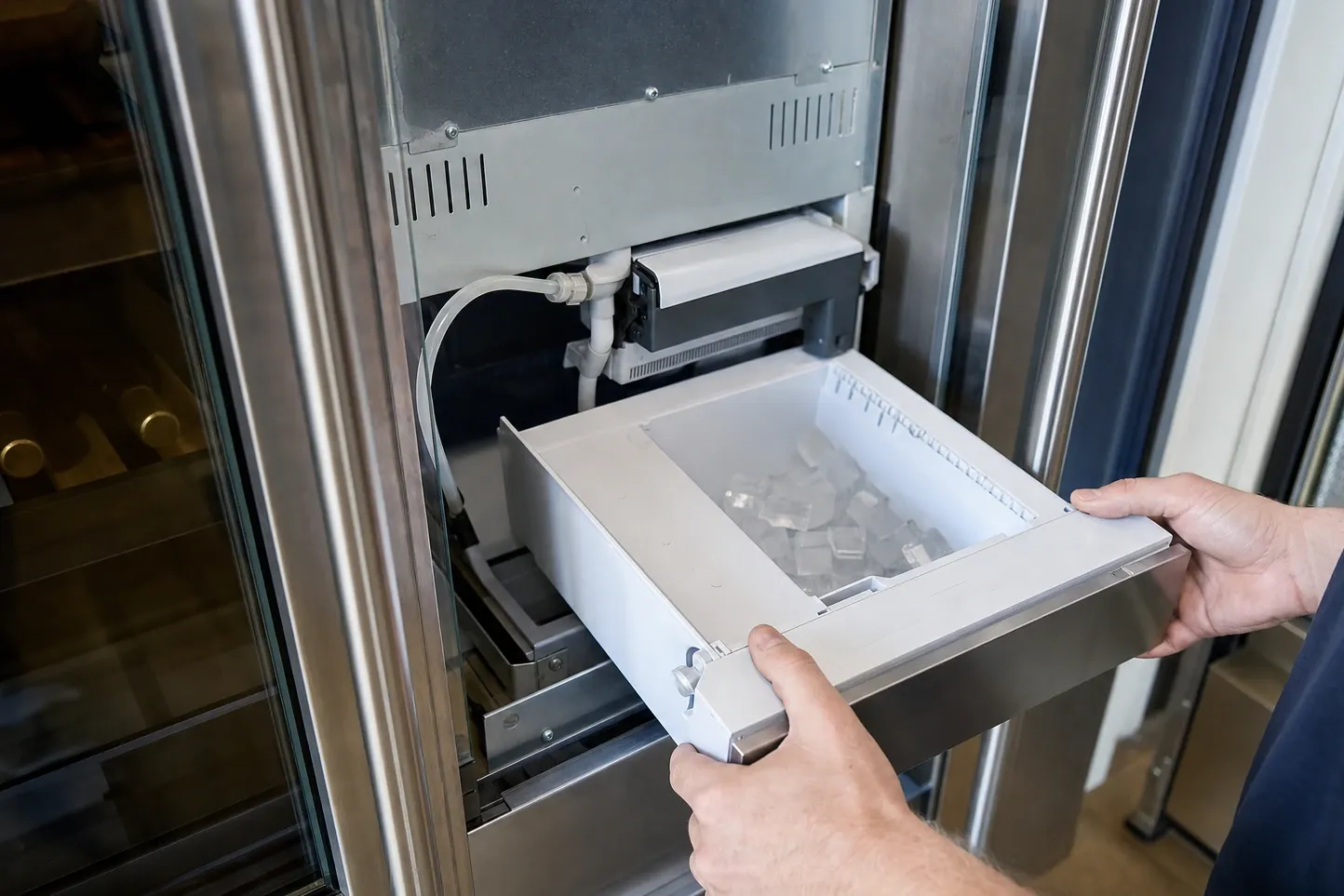
An ice maker is the appliance that shows you what is in your water, and Denver’s water is hard enough to make that visible within a couple of years. Most of the units we are called to for “no ice” or “hardly any ice” are not broken in any interesting way. They are scaled, or they are being starved of water, and both look identical from the outside: a bin that never fills.
What hard water does to a clear-ice module
A Sub-Zero clear-ice maker freezes water in thin layers against a chilled mould, then warms the mould just enough for the slab to release and drop. That whole sequence depends on two things: heat moving cleanly through the mould wall, and the ice letting go when it is asked to.
Scale ruins both. A mineral film on the mould is an insulating layer, so each cycle takes longer to freeze and the unit makes fewer batches a day. The same film gives the ice something to grip, so harvest gets sluggish and sometimes fails, which on many models stops the whole sequence rather than skipping one batch. Meanwhile the inlet screen at the valve collects the same minerals and reduces fill volume, so the cubes that do come out are undersized or hollow.
None of this happens overnight. Output falls off over weeks, and by the time somebody calls it has usually been declining for a month or two.
Read the cube before you read the manual
The shape of what comes out of the bin is the most useful diagnostic you have, and it costs nothing.
- Hollow, thin or short cubes — the mould is not filling. Look at the water inlet valve, the inlet screen and the water line before anything else; why cubes come out hollow takes that apart in one screen.
- Cloudy or white cubes — the freeze cycle is being disturbed. Scale on the mould, low fill, or a cabinet running warmer than its set point.
- Cubes fused into a single lump — either they have been sitting for weeks, or the harvest is late and the last batch is welding to the one under it.
- Perfect cubes, but very few of them — the unit is working correctly and slowly. That is the classic scaled-mould signature.
- Ice that tastes of the freezer — this is not the ice maker. It is an old filter, or an open box of something aromatic sharing the compartment.
- Standing water refreezing on the floor of the compartment — the drain is restricted, or on an undercounter unit the drain pump has failed.
What to check before you call
Start with water, because water is free to check.
Find the shut-off for the ice maker line — usually under the sink or in the basement below the kitchen — and confirm it is fully open. A valve that was closed most of the way during a remodel and never reopened is a genuinely common cause. Then check when the filter was last changed. If the answer is “when we moved in”, change it.
Next, look into the compartment with a torch. You are looking for a chalky white or grey film on the mould, and for frost or ice sitting in the bottom of the bin housing where it should be dry. Take the bin right out and check the drain slot behind it.
Finally, time a cycle. Note the clock, empty the bin completely, and see how much ice is there in three hours. That number is worth having when you call, because “hardly any” and “one batch in three hours” lead to different conversations.
The repairs, and what they actually involve
Descaling is the most common outcome and it is not a five-minute wipe. The mould and the water path need a proper acid descale, several rinse cycles, and the inlet screen cleaned separately. Done properly, output usually returns to what the unit did when it was new.
Fill valve replacement goes with the descale often enough that we bring one. A valve that has been passing hard water for years does not close fully or open fully, and once it is marginal no amount of cleaning helps.
Drive motor or module replacement is the repair people assume they need and rarely do. It is warranted when the harvest sequence genuinely will not complete with a clean mould and full fill — a seized motor, a failed thermostat on the module, or a cracked ejector.
Drain pump work applies to undercounter ice makers. These sit at floor level, they pump meltwater upwards, and they die quietly. The symptom is a sour smell and standing water rather than no ice at all.
When to stop troubleshooting and book a visit
Book when the line is open, the filter is new, and output is still down. Book when the mould is visibly scaled, because a household descale rarely reaches the parts that matter. Book immediately if there is water on the floor of the freezer or under an undercounter unit, because that is a drain problem and drain problems get worse.
The $89 is flat and it buys the timed cycle and the fill measurement along with everything else, then comes off the repair if you approve one. If the verdict is “descale it and change the filter twice a year”, you will get that in plain language rather than a quote for a module you do not need. What a visit covers is set out on ice maker repair in Denver.
Follow-ups
Will a new filter fix low output on its own?
Only if the filter was the restriction. A filter left in past its life does throttle flow and does make ice taste of whatever is nearby, so it is always worth changing. But if the mould is already scaled, new filter or not, the harvest cycle will keep struggling until the scale is off.
Why is my ice cloudy when the unit is sold on clear ice?
Clear ice depends on water freezing slowly in layers with the last of it flushed away. Anything that disturbs that — low fill volume, a partly blocked drain, scale on the mould surface, or a cabinet running warmer than its set point — puts trapped air back into the cube.
Is it normal for ice to shrink in the bin?
Yes, and in Denver it is faster than most places. Frost-free freezers cycle dry air over stored ice and sublimation does the rest, so cubes shrink and fuse if they sit for weeks. If the bin empties in days rather than weeks, that is normal turnover, not a fault.